NATURAL PRODUCTS
To support the national bio-economy agenda via the empowerment of natural product-based industries through bioactive feedstock security.
The Biological Resources Programme (SB) focuses on the research, conservation and sustainable utilisation of medicinal and aromatic plants (MAPs). The programme is driven by the Ethnobiology Branch (EB) and the FRIM Maran Research Station (SPF Maran), supporting ethnobiological research, ex situ conservation and germplasm development.
SB undertakes research and development (R&D) and provides technical services in plant identification and post-harvest technology. The programme also serves as a reference centre for production of quality herbal planting materials and high-quality herbal raw materials.
The Bioprospecting Programme (BA) is dedicated to the discovery, development and scientific validation of natural products’ derived bioactive entities. The programme provides advisory and testing services for the evaluation of potential, efficacy and safety of herbal and natural products for selected therapeutic and cosmeceutical applications.
Research activities focus on targeted bioactivities, vis a vis anti-oxidant (ISO/IEC 17025:2017 accreditation), anti-inflammatory, anti-microbial, anti-proliferative, blood glucose control and anti-cholesterol effects.
The Herbal Quality Control Programme (KKH) supports the quality, safety and standardisation of herbs and herbal-based products through research, development and specialised technical services. The programme is driven by the Phytochemistry Branch (FK) and the Natural Products Development Branch (PPH).
KKH offers technical services including essential oil distillation, extraction using supercritical CO2 system, chemical analysis of herbal materials, standardised extracts, essential oils and agarwood, as well as product formulation. Quality control testing is conducted by the Natural Products Quality Control Laboratory (NPQC). The laboratory operates in accordance with ISO/IEC 17025:2017 accreditation and is recognised as a Panel Laboratory by the National Pharmaceutical Regulatory Agency (NPRA). These credentials directly support natural product registration and ensure full regulatory compliance.
Key Facilities
- Ethnobiology Branch
- Ethnobotanical Garden
FRIM Ethnobotanical Garden has been established on 1995 with the area size of approximately 1.4 ha after expansion in 2009 and 2017. It is located about 400 m from FRIM main entrance. Ethnobotanical Garden acts as a centre for ex-situ conservation and germplasm of medicinal and aromatic plants (MAPS) used by various ethnics in Peninsular Malaysia. It also aims to promote the interest of public on MAPS. To date, there are about 400 species of MAPS from 100 families that are conserved in Ethnobotanical Garden. Several large families conserved consist of Zingiberaceae (ginger family), Rubiaceae (coffee family), Fabaceae (legumes family), Euphorbiaceae (spurge family), Malvaceae (mallows family) and Rutaceae (citrus family). Several popular plants that are commonly used by the industries such as drumstick tree (Moringa oleifera), creat (Andrographis paniculata) and God’s crown (Phaleria macrocarpa) can be found here.
Herb Gallery
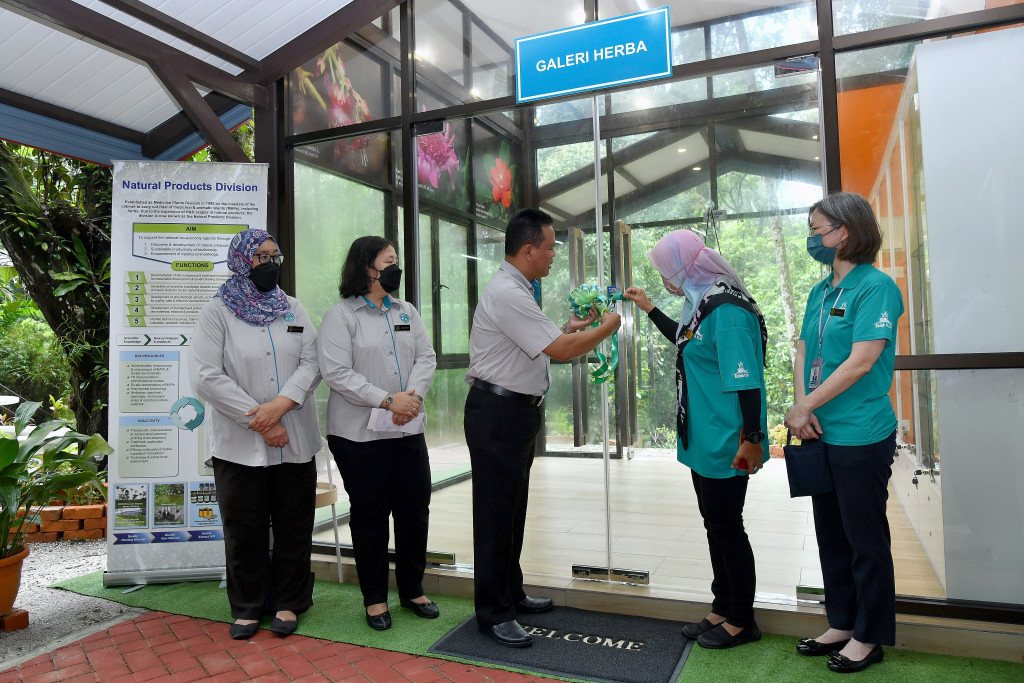
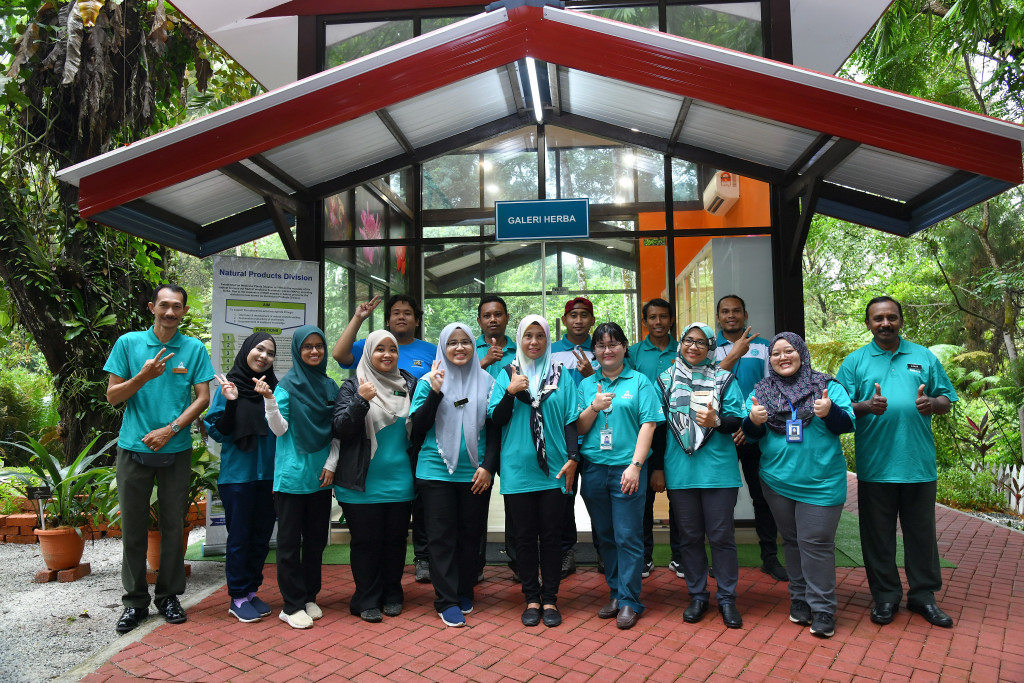
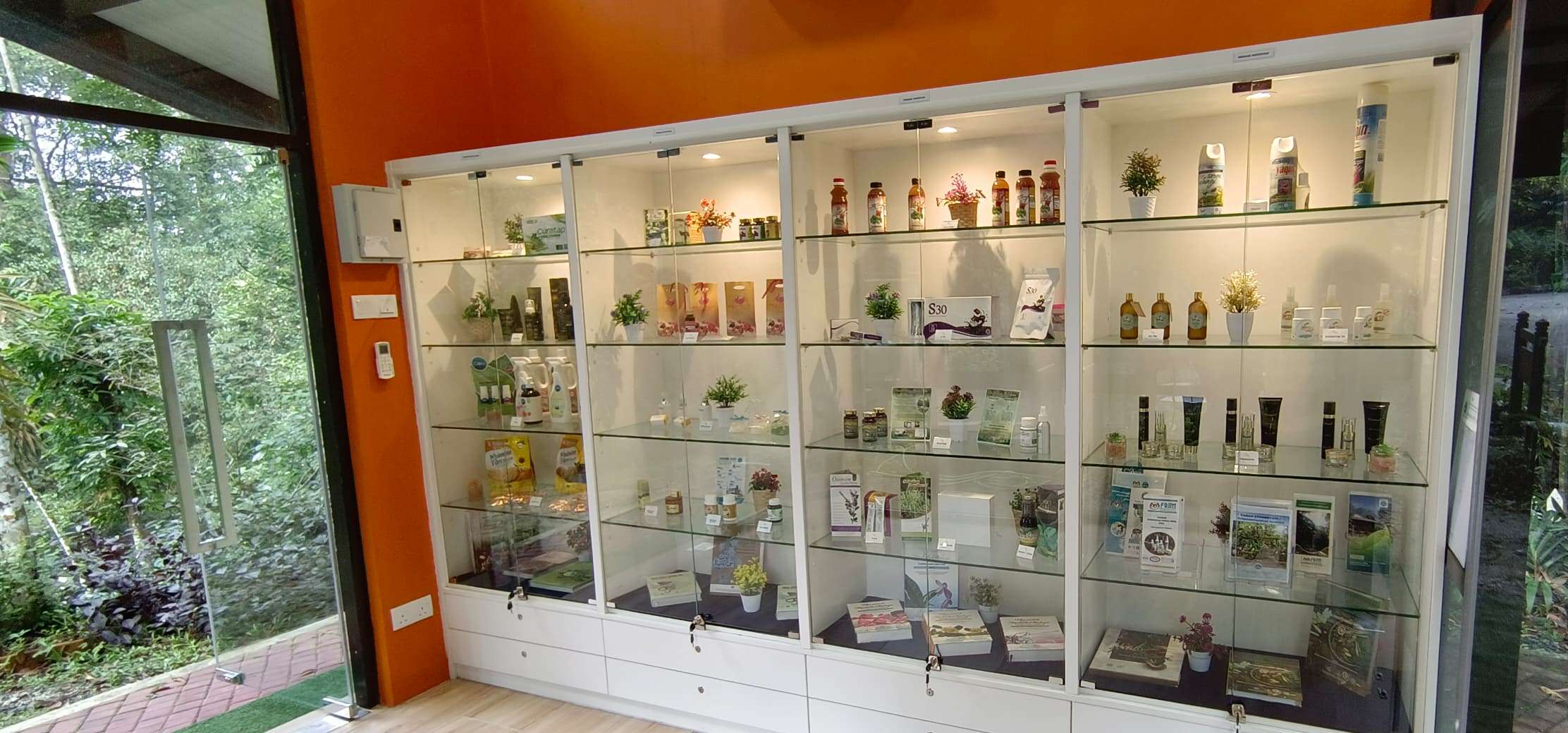
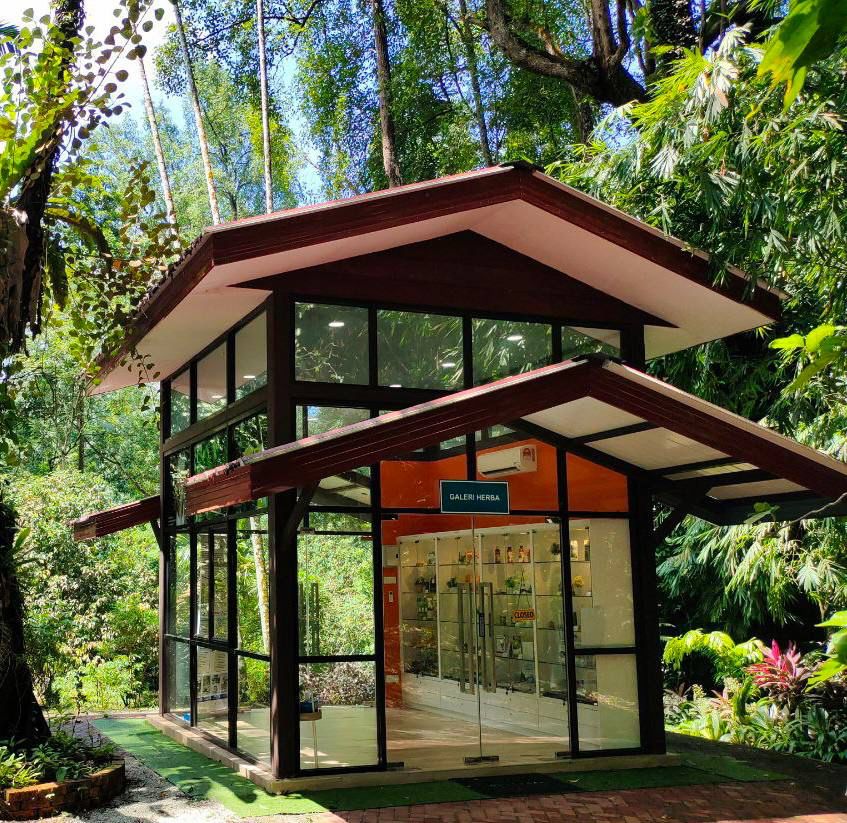
The setting up of the Herb Gallery as a one-stop centre is to showcase the various research outputs of FRIM scientists, particularly related to medicinal and aromatic plants, such as prototypes and products based on herbs and natural products, as well as reference books.
The Herb Gallery was inaugurated on 14 November 2022 by Dr. Ismail Hj. Parlan, Director General of FRIM. It is located in the Ethnobotanical Garden of FRIM and serves as a platform for visitors to learn and acquire new knowledge in the research and development of herbal and natural products.
- FRIM Maran Research Station
- Established in 2000, the station which covers an area of 50 ha acts as a referral centre for setting up of a herbal plantation.
- Planting in open area began with Eurycoma longifolia (tongkat ali), Orthosiphon aristatus (misai kucing) and Morinda citrifolia (mengkudu).
- Subsequent planting in 2003 included Labisia pumila (kacip fatimah), Mentha arvensis (pudina), Elephantopus scaber (tutup bumi) and Curcuma domestica (kunyit) in an oil palm plantation.
- To date, some 20 ha of the area have been planted with various medicinal plants such as Tinospora crispa (patawali), Aquilaria malaccensis (karas), Parkia speciosa (petai), Hopea odorata (merawan siput jantan), Khaya senegalensis (African mahogany), Peperomia pellucida (ketumpangan air), Cinnamomum zeylanicum (kayu manis), Centella asiatica (pegaga), Citrus hystrix (limau purut), Citrus aurantifolia (limau nipis), Cymbopogan citratus (serai makan), Cymbopogan nardus (serai wangi), Vitex negundo (legundi), Neolamarckia cadamba (kelampayan) and Garcinia atroviridis (asam gelugur).
Click here for more information.
Key Laboratories
- Antimicrobial Laboratory (MAM)
- Biology Laboratory (MBIO)
Biology Laboratory (MBIO) of the Bioprospecting Programme in the Natural Products Division, FRIM provides bioactivity testing services to the herbal industry with established bioassays for evaluating antioxidants activity (Xanthine/Xanthine Oxidase Superoxide Scavenging, DPPH Radical Scavenging, Tyrosinase Inhibition, Hydrophilic Oxygen Radical Absorbance Capacity (H-ORAC), Lipophilic Oxygen Radical Absorbance Capacity (L-ORAC), Elastase Inhibition & Total Phenolic Content), anti-inflammatory activity (Hyaluronidase Inhibition, Lipoxygenase Inhibition, Xanthine Oxidase Inhibition & Protein Denaturation Inhibition), anti-diabetic activity (alpha-Amylase & alpha-Glucosidase Inhibition), and in vitro toxicity (cytotoxicity) on Vero (kidney), WRL-68 (liver) & BALB/3T3 clone A31 (fibroblast) cell lines.
- Cell Signalling & In Vivo Research Laboratory (MISIV)
- Biomolecule Research Laboratory (MPB)
Key Laboratories
- Phytochemistry Laboratory (FK)
Phytochemistry Laboratory (FK) of the Herbal Quality Control Programme in the Natural Products Division, FRIM primarily focuses on research activities and technical services related to chemical analysis. The analyses offered in the technical service include quality tests, phytochemical screening tests, analysis of the content of flavonoids, sugars, polysaccharides and saponins by UV-Vis spectroscopy, FTIR spectroscopic analysis, 1D- and 2D-NMR spectroscopic analysis, qualitative and quantitative HPLC and LC-MS profiling, eurycomanone content analysis of raw materials and tongkat ali products by UPLC, and general and qualitative HPTLC profiling. The laboratory has also been accredited by the Department of Standards Malaysia under the Skim Akreditasi Makmal Malaysia (SAMM) meeting the requirements of MS ISO/IEC 17025:2017 for “Identification of tongkat ali root by HPLC analysis”. This analysis is offered to the herbal industry or interested parties to ensure that the raw materials used in their products are genuine and unadulterated.
- Polysaccharide Research Laboratory
- Essential Oil Technology Laboratory
- Product Formulation Laboratory
- Natural Products Quality Control Laboratory (NPQC)
Natural Products Quality Control Laboratory (NPQC) was established within the Herbal Quality Control Programme of the Natural Products Division, FRIM. The NPQC has been accredited by the Department of Standards Malaysia under Skim Akreditasi Makmal Malaysia (SAMM) meeting the requirements of MS ISO/IEC 17025:2017 ‘General requirement of competence for testing and calibration laboratories’ for microbiological, chemical and physical tests. This Malaysian standard is identical to ISO/IEC 17025:2005 published by the International Organization for Standardization (ISO).
The NPQC provides quality control testing services of; a) microorganism contamination, b) heavy metal analysis, c) weight uniformity and d) disintegration test for herbal products. The microbial contamination test includes a) microbial enumeration providing total aerobic microbial count (TAMC) and total combined yeast/mold count (TYMC), b) specific microorganism of Escherichia coli, Salmonella spp., Staphylococcus aureus, Pseudomonas aeruginosa, Bile tolerant gram negative bacteria and Candida albicans. Elements such as Cadmium (Cd), Lead (Pb), Mercury (Hg) and Arsenic (As) are being analysed for heavy metal testing. Both the weight uniformity test and the disintegration test targeted products in the form of tablets and capsules. The above tests are carried out in accordance with the guidelines set out in the Drug Registration Guidance Document and Control of Drugs and Cosmetics Regulations 1984. NPQC has also received recognition and approval from the National Pharmaceutical Regulatory Agency (NPRA), Ministry of Health as a testing laboratory for traditional products. With this, the quality control test report issued by NPQC, FRIM is recognised and accepted by NPRA. In addition, NPQC is one of the laboratories in the Natural Products Division that has been awarded BioNexus Partner (BNP) status by Malaysian Bioeconomy Development Corporation Sdn. Bhd.